
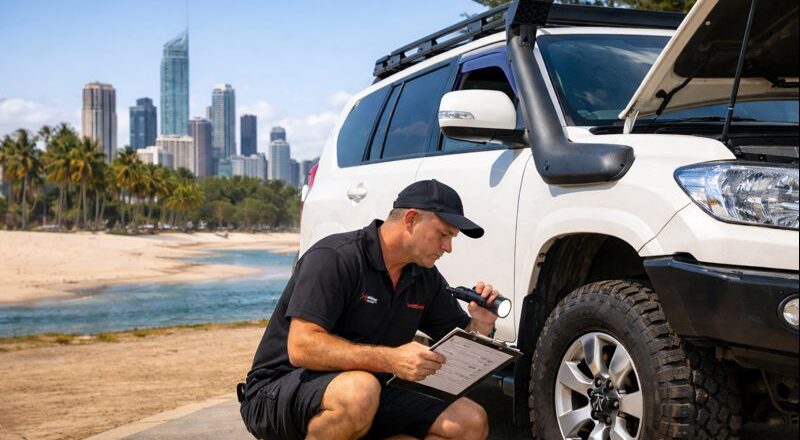
How to Prepare Your Car for Inspection and Pass the First Time
If you’re booking a roadworthy certificate in Queensland, one of the first questions almost everyone asks is:
“Is my car actually going to pass?”
On the Gold Coast, that anxiety is completely understandable. Vehicles here live in a very different environment to cars in inland Queensland or southern states. Salt air, humidity, heat, short coastal trips, heavy motorway use and long periods parked outdoors all take a toll — often in ways owners don’t notice until an inspection day arrives.
The good news is this:
Most roadworthy failures in QLD are not caused by major mechanical faults. They’re caused by small, predictable issues that are cheap and easy to fix if you know what inspectors actually look for.
This guide explains exactly what fails a roadworthy in Queensland, what inspectors are checking in real-world conditions, and how to prepare your car properly so it passes the first time.
What Is a Roadworthy Certificate in Queensland?
In Queensland, a roadworthy certificate is officially called a Safety Certificate. It confirms that a vehicle meets the minimum safety standards set by Transport and Main Roads.
A Safety Certificate is legally required when you are:
-
Selling a registered vehicle
-
Transferring registration to a new owner
-
Re-registering an unregistered vehicle
-
Bringing a vehicle into Queensland from interstate
It’s important to understand what a roadworthy is and isn’t.
It is not a mechanical service.
It is not a warranty.
It is not a cosmetic inspection.
It is a compliance check focused purely on safety-critical items. That’s why cars that “drive fine” or “have just been serviced” still fail roadworthy inspections every single day.
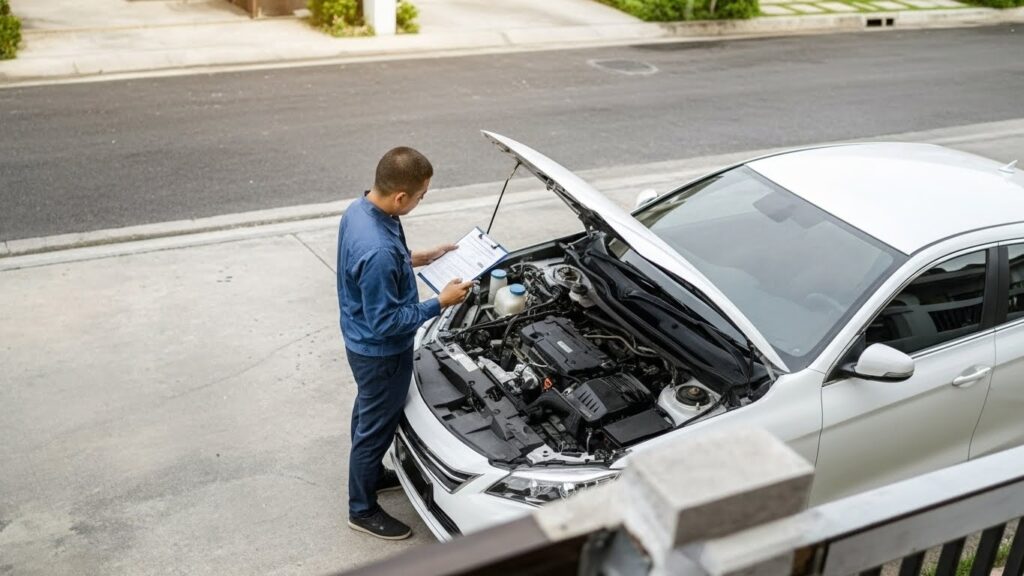
The Most Common Reasons Cars Fail a Roadworthy in QLD
These are the real-world failure points seen over and over again across the Gold Coast, Tweed Heads and surrounding suburbs.
Tyres Below Legal Tread Depth
This is consistently the number one failure item.
In Queensland, tyres must have at least 1.5mm of tread depth across the central tread area. They must also be free of bulges, cracks, exposed cords and serious sidewall damage, and they must be the correct size and rating for the vehicle.
On the Gold Coast, tyres wear faster than most people realise.
Regular motorway driving on the Pacific Motorway, combined with coastal commuting along the Gold Coast Highway, creates higher heat and faster wear. Add aggressive cornering on roundabouts in suburbs like Robina, Varsity Lakes and Burleigh, and tyres that “look okay” are often already below the legal limit.
What catches people out is that bald patches don’t always show evenly across the tyre. The inner edge often wears first, especially if wheel alignment has been neglected.
How to prepare:
Use a tread depth gauge or the built-in wear indicators on your tyres. If you’re close to the limit, replace them before your inspection. Tyres are cheaper than re-inspection delays and lost buyers.
Brake Wear and Brake Performance Issues
Brakes must be in safe working condition and perform evenly.
Common failures include:
-
Brake pads or discs worn beyond safe limits
-
Uneven braking
-
Brake warning lights illuminated
-
A handbrake that doesn’t hold the vehicle securely
Gold Coast driving is brutal on brakes. Stop-start traffic through Southport, Surfers Paradise and Burleigh Heads, combined with short local trips, wears pads far faster than highway cruising.
A car that “still stops fine” can still fail if pads are too thin or the handbrake is weak.
How to prepare:
If your brakes squeal, grind, feel spongy or your handbrake needs to be pulled excessively high, have them checked before booking your roadworthy.
Lights and Electrical Faults
Every exterior light must work correctly, including:
-
Headlights (low and high beam)
-
Brake lights
-
Tail lights
-
Indicators
-
Reverse lights
-
Number plate lights
On the coast, corrosion is the silent killer.
Vehicles parked near the beach in Palm Beach, Currumbin, Tugun and Coolangatta regularly develop corroded bulb sockets and wiring connectors. A bulb might work one day and fail the next.
How to prepare:
Turn all lights on and walk around the car. Check indicators, brake lights and reverse lights properly. Replace blown bulbs and clean corroded contacts if needed.
Windscreen Damage and Wipers
Your car will fail if:
-
There are cracks or chips in the driver’s field of vision
-
The windscreen is severely damaged
-
Wipers do not clear the screen effectively
Gold Coast heat causes small stone chips to spread rapidly. A tiny crack picked up on the M1 can become a full-width windscreen fracture in a week.
How to prepare:
Repair chips early. Replace worn wiper blades. Make sure washer jets work.
Seatbelts and Restraints
All seatbelts must:
-
Extend and retract smoothly
-
Lock correctly when pulled sharply
-
Not be frayed, torn or damaged
Any faulty seatbelt is an automatic fail.
How to prepare:
Test every seatbelt in the vehicle, not just the driver’s.
Suspension and Steering Wear
Common failures include:
-
Worn ball joints
-
Loose tie rods
-
Leaking shocks or struts
-
Excessive steering play
These issues are common in older vehicles and cars regularly driven on uneven suburban roads or hinterland areas like Mudgeeraba and Tallebudgera Valley.
How to prepare:
If the car feels loose, bouncy or wanders at speed, have it inspected before your roadworthy.
Oil Leaks and Fluid Leaks
Minor seepage is often acceptable.
Active leaks, dripping fluids or oil spraying onto components are not.
How to prepare:
Park overnight and check for fresh puddles under the car.
Rust and Structural Damage
Rust is a major failure point in coastal Queensland.
Inspectors pay close attention to:
-
Chassis rails
-
Floor pans
-
Suspension mounting points
-
Seatbelt anchor points
Vehicles regularly parked near the ocean in Palm Beach, Currumbin and Tugun are far more prone to corrosion than inland vehicles.
How to prepare:
If you can see obvious rust underneath the vehicle, get it assessed before booking.
What Inspectors Do Not Check
A roadworthy inspection does not include:
-
Engine compression
-
Gearbox internals
-
Paintwork or cosmetic condition
-
Minor oil seepage
-
Full mechanical servicing
This is why a car can pass a roadworthy and still develop a mechanical issue months later. The inspection is about safety compliance, not long-term reliability.
How to Prepare Your Car for a Roadworthy Inspection
A simple pre-check dramatically increases your chance of passing first time.
Check all exterior lights.
Check tyre tread depth and condition.
Test brakes and handbrake.
Inspect wipers and windscreen.
Check all seatbelts.
Look under the car for leaks.
This 15-minute check saves most people from failing.
What Happens If Your Car Fails?
Failing a roadworthy is common and not a disaster.
You’ll be told exactly what needs fixing.
Once repaired, a re-inspection is required.
With Roadworthy.me, a free re-inspection is included within 14 days, removing the stress of paying twice for the same certificate.
Final Advice
Most QLD roadworthy failures are caused by simple, fixable issues.
Preparing your car properly:
-
Saves time
-
Saves money
-
Avoids re-inspection delays
-
Reduces stress when selling or transferring registration
Book a Roadworthy Certificate on the Gold Coast
If you need a roadworthy certificate in Queensland, Roadworthy.me provides:
-
Mobile inspections
-
$120 flat rate
-
Free re-inspection included
-
Same-day service available