
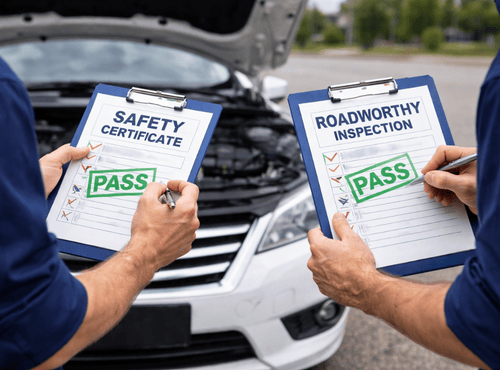
If you are selling a vehicle in Queensland, you have probably come across the terms safety certificate and roadworthy certificate. Many people assume they are two different documents, while others think they are interchangeable. This confusion often leads to delays in vehicle sales, unexpected fines, and unnecessary stress.
The truth is simple, but not always clearly explained. In Queensland, a safety certificate and a roadworthy certificate are essentially the same thing. The difference lies mainly in terminology and context.
This guide explains the legal meaning, requirements, responsibilities, and common misunderstandings so you can handle your vehicle sale with confidence.
What Is a Safety Certificate in Queensland
In Queensland, the official term used by the Department of Transport and Main Roads is safety certificate. This document confirms that a vehicle meets the minimum safety standards required for use on public roads.
A safety certificate is issued after an inspection by a licensed examiner who checks key safety components of the vehicle. The purpose is not to guarantee mechanical perfection but to ensure the vehicle is safe for operation at the time of inspection.
The certificate includes vehicle details, inspection date, and examiner information. It must also be displayed correctly when selling a vehicle privately.
What Is a Roadworthy Certificate
The term roadworthy certificate is widely used across Australia. In many states, this is the official name of the inspection document. In Queensland, however, the government uses the term safety certificate instead.
Despite the different wording, the meaning is the same. When people in Queensland talk about a roadworthy certificate, they are usually referring to a safety certificate.
In everyday conversation, both terms are commonly used by buyers, sellers, mechanics, and inspectors. Legally, they refer to the same inspection process.
Why the Terminology Causes Confusion
The confusion exists because of national differences. Other states such as Victoria and New South Wales officially use the term roadworthy certificate. When drivers move between states or search online, they see both terms used interchangeably.
Businesses often use the phrase roadworthy because it is familiar and easier for customers to recognise. Meanwhile, government websites and legal documents consistently refer to the safety certificate.
Understanding this difference helps avoid unnecessary misunderstandings during a vehicle sale.
When a Safety Certificate Is Required
In Queensland, a safety certificate is required in several situations involving vehicle ownership changes.
You must obtain one when selling a registered vehicle privately. It is also required when transferring registration to a new owner or re-registering a vehicle after registration has expired.
This is a legal requirement, not just a recommendation. The Queensland Government states that a current safety certificate must be provided when transferring vehicle registration to a new owner. This ensures the vehicle meets minimum safety standards before ownership officially changes.
Without a valid certificate, the seller may face fines, and the transfer process cannot be completed.
Who Is Responsible for Obtaining the Certificate
In most private vehicle sales, the responsibility lies with the seller. The law requires the seller to provide a valid safety certificate before listing the vehicle for sale.
This means you cannot legally advertise a registered vehicle for sale without already having the certificate or clearly stating that one will be provided before delivery.
Dealerships follow different procedures, but private sellers must comply with this rule to avoid penalties.
How Long a Safety Certificate Remains Valid
A safety certificate does not last indefinitely. Its validity depends on how the vehicle is being sold.
For private sellers, the certificate is valid for two months or 2,000 kilometres, whichever comes first. For licensed motor dealers, the validity period extends to three months or 1,000 kilometres.
If the certificate expires before the sale is completed, a new inspection is required.
What the Inspection Actually Covers
Many sellers mistakenly believe a safety certificate guarantees the vehicle is in excellent condition. In reality, the inspection focuses only on specific safety components.
The examiner checks items such as tyres, brakes, steering, suspension, lights, body structure, seatbelts, and windscreen condition. The inspection ensures the vehicle meets minimum safety standards at the time of testing.
It does not cover engine performance, future reliability, or cosmetic issues.
Legal Consequences of Not Having a Certificate
Failing to provide a safety certificate when required can lead to fines and legal complications. Sellers who advertise a registered vehicle without a valid certificate may face penalties from Queensland authorities.
Buyers also have the right to withdraw from a purchase if the certificate is not supplied as required.
Understanding these legal obligations protects both parties during a vehicle transaction.
Display Requirements for Private Sellers
Queensland law requires sellers to display the safety certificate on the vehicle when it is offered for sale. This usually means attaching the certificate to the windscreen where it is clearly visible.
If selling online, you must also indicate that a safety certificate is available.
These rules exist to protect buyers and ensure transparency in the sale process.
Common Myths About Safety Certificates
One common myth is that a safety certificate guarantees the car will not break down. This is incorrect. The certificate only confirms compliance with minimum safety standards at the time of inspection.
Another misconception is that buyers can transfer registration without a certificate. In most cases, this is not possible unless special exemptions apply.
Understanding these facts helps prevent disputes and delays.
How to Prepare Before Booking an Inspection
Preparing your vehicle can improve the chances of passing on the first attempt. Simple steps include checking that all lights work, ensuring tyres have adequate tread, replacing worn wiper blades, and cleaning the vehicle.
Fixing minor issues before the inspection can save time and reduce the need for re-inspection fees.
Why the Certificate Matters for Buyers
From a buyer’s perspective, the safety certificate provides reassurance that the vehicle meets basic safety standards. While it does not replace a full mechanical inspection, it serves as an essential legal and safety safeguard.
For this reason, most buyers will not proceed with a purchase without one.
Safety Certificates and Roadworthy Terms
The difference between a safety certificate and a roadworthy certificate in Queensland is mostly a matter of terminology. Legally, they refer to the same document and inspection process.
Understanding this helps vehicle sellers avoid confusion, comply with regulations, and complete transactions smoothly. Knowing your responsibilities ensures you meet legal requirements while protecting both yourself and the buyer.
If you need a clear, reliable, and fully compliant inspection for your vehicle sale, contact Rodwothy.me for professional safety certificate services across the Gold Coast.
FAQs
1. Is a safety certificate the same as a roadworthy certificate in Queensland?
Yes. In Queensland, the official legal term is safety certificate, but many people call it a roadworthy certificate. Both terms refer to the same inspection and document.
2. Do I need a safety certificate before advertising my car for sale in QLD?
Yes. Private sellers must have a valid safety certificate before advertising a registered vehicle for sale, or clearly state that one will be supplied before delivery. Failing to do this can result in fines.
3. Who is responsible for getting the safety certificate — buyer or seller?
For private sales, the seller is responsible for obtaining and displaying a valid safety certificate before listing the vehicle for sale.
4. Does a safety certificate guarantee the car has no mechanical problems?
No. A safety certificate only confirms that the vehicle meets minimum safety standards at the time of inspection. It does not guarantee long-term reliability or overall mechanical condition.
5. How long is a safety certificate valid in Queensland?
For private sellers, a safety certificate is valid for two months or 2,000 kilometres, whichever comes first. If it expires before the sale is completed, a new inspection is required.